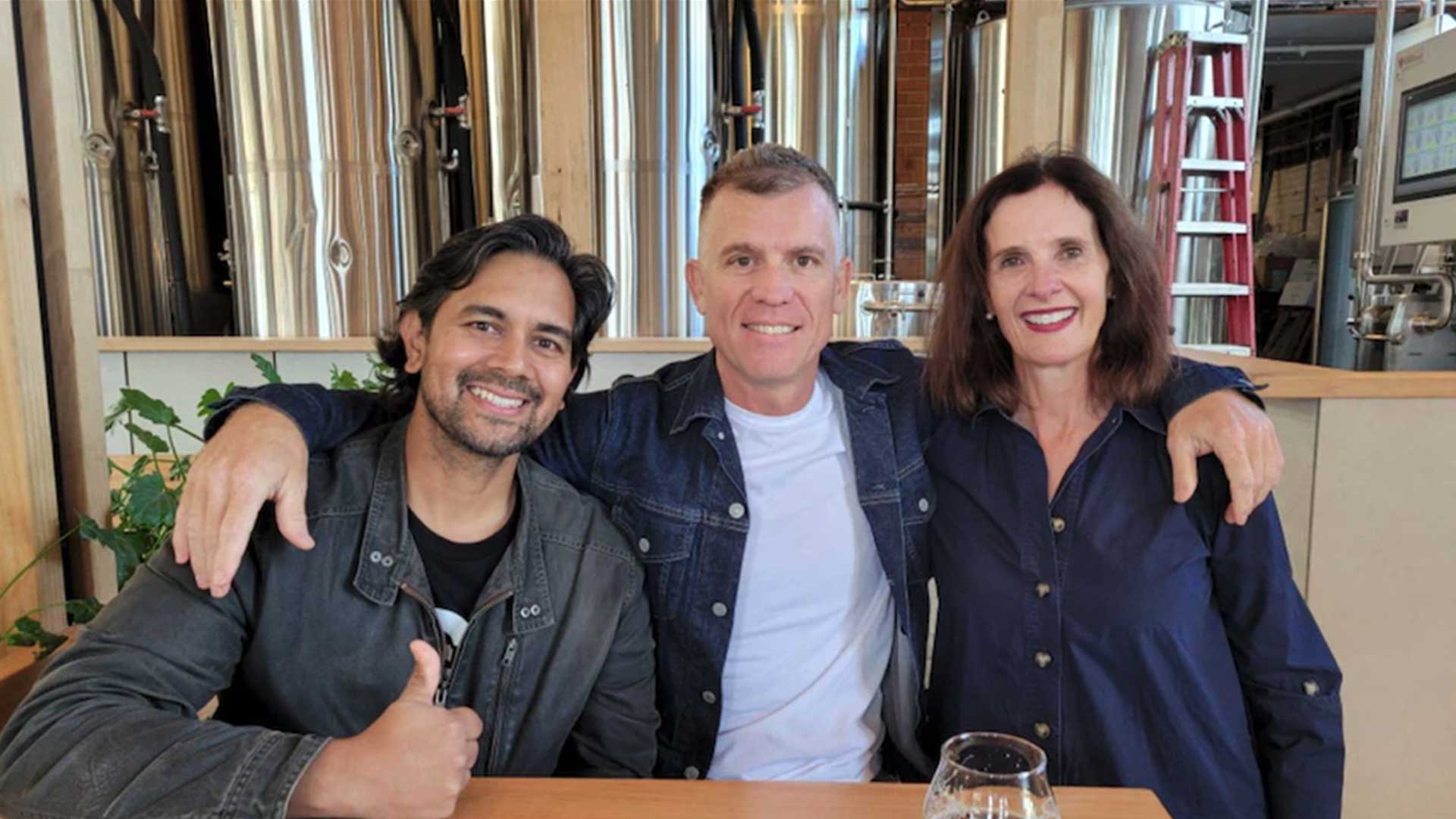
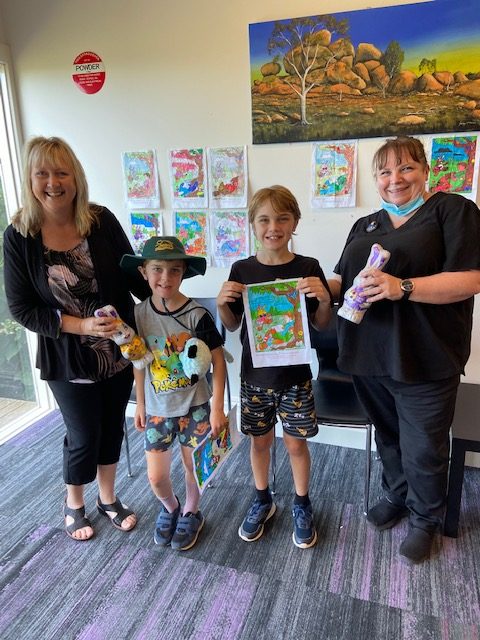
Above: Floyd, Steve and Di – fortunate friends.
My kids are growing up a bit these days. Whilst I used to be able to tell them what to do, now I have to make sure my arguments stack up or I’m in trouble. My eldest son especially is one heck of a debater. And somewhere in that mix of questions and fingers being pointed my way, I realised – I don’t really know what I’m doing as a parent.
So, as it is with such things that I feel I don’t know enough about, I looked to educate myself. In this case, I turned to books, and I stumbled across a concept that I find compelled to share.
A long time ago, I think I wrote an article in this newsletter that asked the question, when a child gets hurt, in a minor way, should you (I) encourage them to brush themselves off quickly, “chin up”, or sympathise with them. I asked myself this question because I wanted my children to grow to be compassionate for others, for society, yet be strong within themselves and have fortitude all the same.
And now, many years later, I’ve formed a stance.
When a child or an adult has an experience, good or bad, they get a feeling. That feeling comes in a wave and it’s very compelling and not so easily “nipped” in the bud, or if it is, not naturally so. After that feeling, classically there is a behaviour. Such an automatic behaviour, we call a “habit”. Beyond the habit, our conscious mind (pre-frontal cortex) brings in a period of reflection and reasoning, a lucid moment occurs where logic comes in. “Okay, it was just a graze on my knee, I think I’ll be alright now that the band aid is on.”
The thing is, I have concluded that it’s vital that a child be given the time and opportunity to move through the above steps at their own pace. This is because at the point of having a feeling, if one is rushed through it, for example, “Don’t worry about it, you’re fine,” too abruptly by an external source (e.g., a parent), that child actually gets confused and worse still, can end up feeling a degree of guilt, “I was in pain, but mum or dad said I shouldn’t be”.
Even as an adult, just like a child, our experiences cause us to rather automatically have feelings. Those feelings, coming in a wave, can almost be unavoidable. If we haven’t learnt to allow ourselves time to sit with a feeling, pause before we act and then move to reasoning and reflection, we’re left in our day with our experiences triggering internal crises leading to confusion, anger, frustration and guilt. These crises we find hard to resolve.
As an example of this, recently, our clinic has been involved in training about domestic violence and how to best support victims and perpetrators. On the perpetrator side, it’s conceivable that a failure to adequately grapple with feelings triggers just such an internal crisis, that, unresolved, escalates to anger and the behaviour of violence which ensues.
So, to conclude, I reckon kids need time to move through their experiences, feel what they need to feel, do what they need to do and then reflect, for themselves. In giving them the space to do this, we in fact give them the space to develop their own inner guide, their own self-regulation. Once developed, these attributes, this quiet confidence, they carry for life.
I could actually keep writing for a very long time about this, particularly the phenomenon of a “habit” and the power of it. Habits dominate our day, they save our conscious mind, and provided we cultivate good ones, wow – that’s powerful. Food for thought – for another The River’s Mouth!
Finally – just a wrap up from a few articles ago “Ode to the Bee Gees” about CPR, well it so happened that amazingly the person who had the cardiac arrest and received CPR did survive and he (Steve) got in touch with me after the event. I was overjoyed to learn that he’s doing great. ABC ran with the story. Here’s the article and here’s a link to the video. The experience spurred me to become a CPR trainer, so I’m moon lighting with the path to that. And of course, looking forward to my next catch up with Steve!
Dr Floyd Gomes