MAKE AN APPOINTMENT 1800 288 428

Is it ever too late to start a revolution?

It’s not that long ago that a patient of mine in her 70s lost 30kg and I light-heartedly said, “It’s time you got a tattoo.” The next time I saw her she flashed her arm, and there it was, the butterfly she always wanted. We high fived. What a blast!

Lives, businesses and nations – they all go through periods of evolution, and periodically, revolutions. Presently Atticus is going through a revolution. Although still a small business, you may be surprised to hear that we employ over 250 people. What that means is that Atticus now needs the help of people who are much more organised and logical than I ever have been or could be. And I’m most grateful for that team.

So, coming back to the question, is it ever too late to start a revolution? It’s not. The reason being is that with a revolution the biggest thing to change is your state of mind. Let’s look at a few examples of what goes on out there. Given I’m a doctor, I’ll loop back to see if anything about this story has a link to health. Take the ride for a moment though. Here goes:

The change of job

I know people who’ve gotten sick of the big corporate world, and went out and did their own thing. We all know these people. Or, they moved into a field that resonated more with who they were. Sometimes that involved further education, sometimes it didn’t. My own story is somewhat along those lines. I started my career briefly in banking, before realising it wasn’t me, so committed to becoming a doctor.

The change of partner

Some people realise they’re just not with the right person, and they make a break. That’s a big step, but if you’re in the wrong relationship, and you really think you’ve given “love the one you’re with” a really good go, something’s got to give.

The change of pet

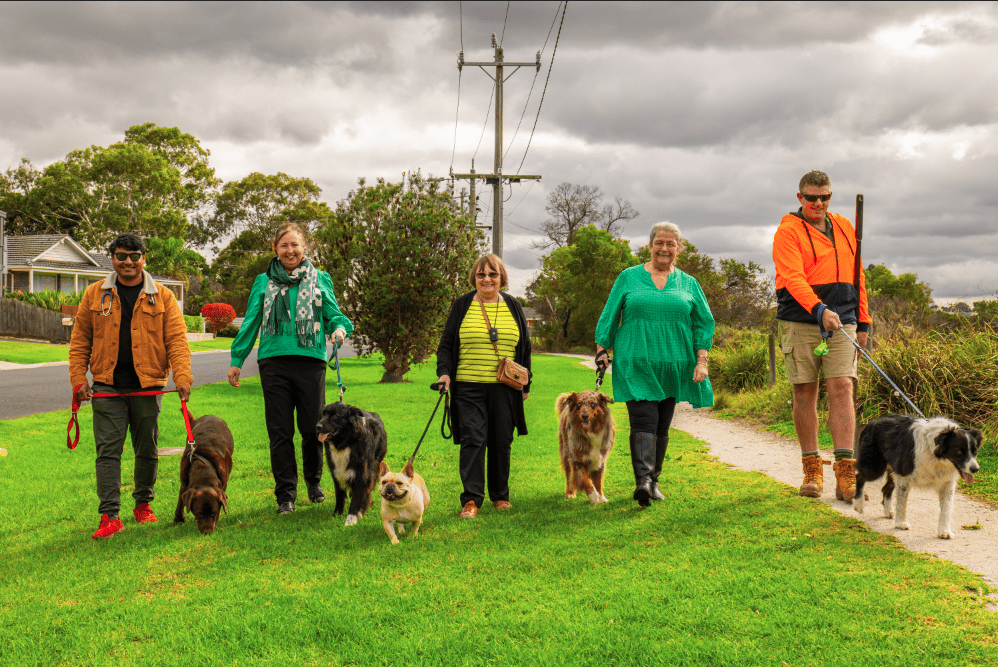
Recently, I’ve met a few people who’ve lost their dogs. In all cases, they ultimately died of old age. Irrespective of the cause, the impact was very significant. For example, one person who used to walk their dog twice a day, started to get bad back pains. We put two and two together and worked out that those walks meant a great deal. It may be time to get a pet. It sounds so simple, but getting a new pet, can change a life dramatically, no matter what stage.

You get the drift

Somewhere in these changes, there’s a quiet revolution. And a revolution usually links closely to a person considering who they are or want to be, then being it, and doing it. This may involve honestly considering their strengths and weaknesses, and typically running with their strengths. On this note, I remember in the very early days at Hastings, we held a local forum about the issue of increasing drug use among youth. Attendees included parents, paramedics, ex-users and those involved with rehab. What came through to me after that was that many young drug users never really identified any particular strength they had whilst growing up. They never got to the point of believing they were “great” at something. That’s a really important part of self-identity.

Finally – About Health

Coming back to the point of revolution and health, it’s a very satisfying and healthy way to be – to live true. True to who you are and what you believe in. When we don’t get or give ourselves the space to do this, it creates a lot of mental anguish that only builds. Helplessness, hopelessness, anxiety and depression can follow. The good news is that if you make a change, and it doesn’t work out, well you had a red-hot go, and in the annals of life, that’s all that really matters.

So it is, on any given day, rather than forever living in the regret of what could have been, we all have that chance to start a revolution in small and big ways. And take heart that nearly all of it begins and ends in the quiet of our state of mind.

Where will your life take you today?
The Blood Pressure Limbo – How Low Can You Go?

I read an article recently in a medical publication which reaffirmed to me that our management of blood pressure in Australia could be better. That’s to say that too many people still walk around with high blood pressure and either don’t know it, or have it inadequately treated.

Here is a link to the article from the RACGP –

https://www1.racgp.org.au/newsgp/clinical/australian-hypertension-control-rates-still-lag

The interesting figures from this article are:

  • 39% of Australian adults have high blood pressure
  • Of these, 4 out of 10 (40%) have it properly controlled
  • The National Hypertension Taskforce has set the following target: 70% of patients with high blood pressure should have it well controlled by 2030
  • In Canada today an estimated 70% of people with high blood pressure have it well controlled

What does this mean?

Well for one thing, so many people have high blood pressure! Furthermore, less than half of have adequate control. We’re also a bit behind Canada, where a program targeting this issue was started earlier.

Why care about your blood pressure?

High blood pressure is the most proven risk factor for cardiovascular disease. That’s to say that if you have high blood pressure you increase your risks of having a stroke or heart attack. Apart from that, having high blood pressure damages all your arteries around your body including into your legs, kidneys and even your eyes. So, all these organs can suffer.

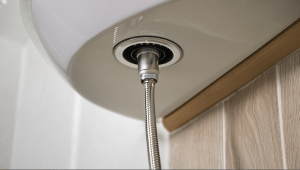
If you’re still struggling to understand why high blood pressure could be bad, sometimes I use the following example with patients. Think of those ‘flexi hoses’ under the basin or sink in your house. Remember how they can just ‘pop’ and bust open causing a flood? And, as plumbers sometimes recommend these days (and insurers sometimes demand) you can install a pressure regulator at the mains to reduce the pressure going into the house. This protects all the hoses and pipes. Well, that’s just like your body. A hose pops in your brain, and you have a stroke. We really don’t want that!

How do you bring your blood pressure down?

  1. Lifestyle. The main things in your lifestyle that contribute to your blood pressure being high are:
      • Salt – the more salt you eat, the higher your blood pressure
      • Alcohol – drink too much, and your blood pressure goes up
      • Smoking
      • Exercise – the more you exercise, the lower your blood pressure
      • Weight loss – tends to bring down your blood pressure
      • Sleep Apnoea – if untreated tends to raise your blood pressure
  2. Medications: There are many different medications out there for lowering blood pressure. Fortunately, many of them have been around for a long time and are generally very safe.

A little story here about taking medications and the trade-off with doing it without or ‘naturally’. It was Oscar Wilde who said, “The road to hell is paved with good intention”. Simply put, this means that more is often needed than just meaning to do well. Not to be too harsh, but it is a bit like that sometimes with health. After all is said and done with our efforts to improve our health, sometimes we just need to get there. In the case of blood pressure, if you try your best with your lifestyle and you’re not winning, then it may be that you have some rarer cause for high blood pressure. This is called “secondary hypertension”. For example, an overactive thyroid gland could be raising your blood pressure. Often this isn’t the case though, and it comes down to your genes just coding for high blood pressure.

Now at this point, having tried your best with your lifestyle, you have a fork in the road – take a medication or not. It’s at this point that some people really resist going down the medication road. I remember a sad story about a patient just like this, and I could never convince her to take any blood pressure medications. The one time I did, she reported all sorts of side effects and vowed not to do it again. So, her blood pressure remained high, and I still remember the day she had a massive stroke right there in the clinic. I felt terrible that I had failed to influence her to take medication to lower her blood pressure. I hope that doesn’t ever happen to you. With blood pressure, it is a matter of making sure that you get to the outcome, whichever road you tread.

How to measure your blood pressure?

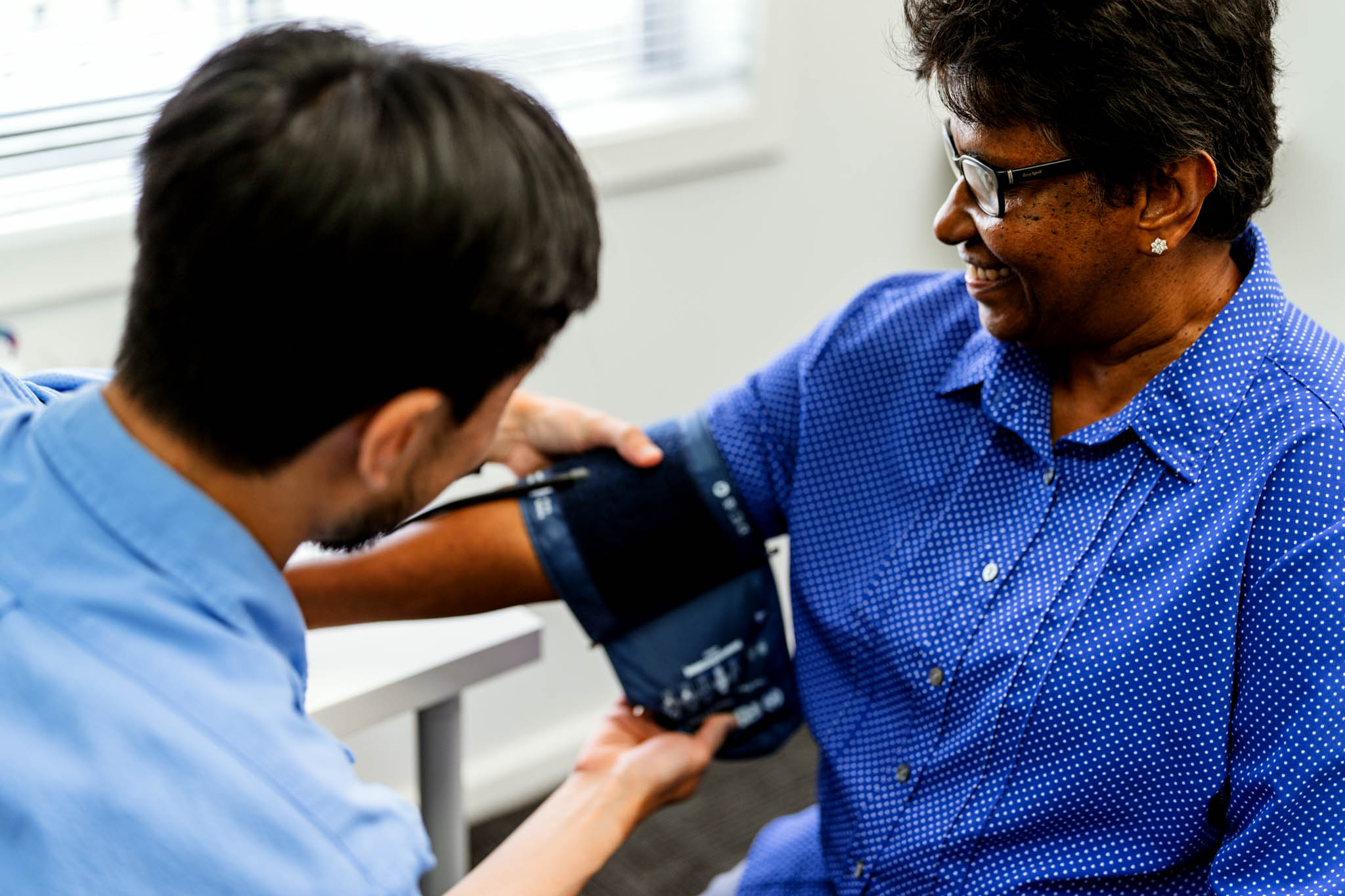
Of course, when you come in to see the doctor your blood pressure can be higher than what it is at home. This is because some people naturally get nervous about having it tested or being around doctors. This is called ‘white coat hypertension’. To mitigate this, you can test it in a regimented way at home for one week and bring those readings to your doctor who can take the average. It’s recommended that you test it twice in the morning separated by one minute and twice in the evening separated by one minute (that’s right, four times a day) for one week. That sounds a bit onerous, but only for one week. You can do it! Here is a link to a blood pressure checker you can print out for this purpose –

https://www.mshomecare.com.au/resources/

Just click on the ‘Home Blood Pressure Monitoring Notebook’.

The special case of older people

The RACGP article also makes special mention of older people. This is fair: sometimes it’s tough to balance lowering someone’s blood pressure and not making them feel dizzy or increasing their risk of falls. Firstly, it’s quite staggering to note that up to 85% of people over 75 years old have high blood pressure. Staggering, but understandable. This happens in part because our arteries are naturally more stretchy/elastic (‘compliant’ if you want to get technical) when we’re young. So, when our heart pumps blood our arteries are able to expand avoiding the pressure getting too high. When we age, our arteries get stiffer and sometimes become lined with calcium. When this happens, and our heart pumps blood into them, they can’t expand as well, and blood pressure goes up more readily.

So, what is a correct blood pressure for an older person? The article describes that generally less than 130/80 is good. It concludes that for older people, the risks of having high blood pressure outweigh the risks of having low blood pressure, so I think applying this figure is still valid, even for this population.

A word of advice and caution, one you may have received before: when you first start a new blood pressure medication, change your position slowly when getting up as that’s when your blood pressure could drop too low. In other words, gradually move from laying to sitting to standing, perhaps with a few calf pumps in between to really push that blood back to your heart. Generally, your body settles into things, but at the start it pays to go slow.

In conclusion

Our friends in Canada are controlling their blood pressure a lot better than we do in Australia, but we can catch up. I hope that this article helps all the patients of Atticus control their blood pressure better. If you do, as I’ve mentioned, so many parts of your body stand to benefit. And if you have to take medications, remember those rather ominous words of Oscar Wilde and accept it. It’s a case ultimately of a bit of trial and error, and landing on whatever works. Don’t let yourself stay in the blood pressure limbo. It ain’t the game your body wants you to play.

Dr Floyd Gomes